Spirit

Safety and Shipboard Information

Cruise Loch Ness welcomes you aboard.

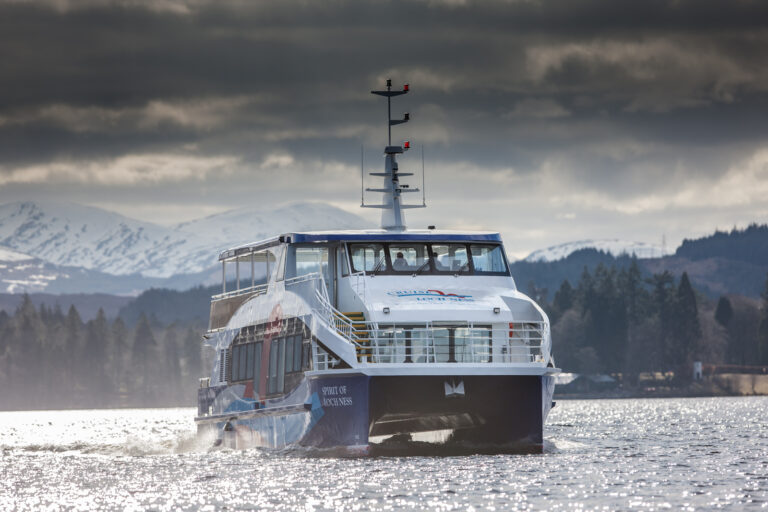
This Cruise Loch Ness vessel is a custom built cruise ship which complies with the British Maritime and Coastguard Agency’s regulations.

For your comfort and safety please listen to the following safety announcement.

In the unlikely event of an emergency please listen carefully to the instructions given through the vessel’s public address system and directions given by crew members.

Life jackets are stored under the seats in the saloon and in marked boxes on both the lower back deck and upper deck. Instructions are clearly displayed in the saloon and in the wheelhouse window. Crew members will assist if required.

Life rafts are located on the top back deck. These will deploy automatically or manually and crew members will instruct and assist you to board them. The captain asks all passengers with children to please be aware that running is not allowed on board and your children must be with you at all times.

Please use the litter bins throughout the vessel and never discard rubbish over the side. The entire Cruise Loch Ness vessel is a NO SMOKING zone so there is no smoking anywhere on the vessel.

We have a bar on the lower deck with a good selection of beers, souvenirs and, of course, malt whiskies.

Toilets are located on the starboard (right) side for ladies and on the port (left) side for gentlemen.

If you need any further help or information please feel free to ask a member of the crew.

So, now, sit back, relax, and enjoy the wonders of Loch Ness in the Great Glen of Scotland … but please don’t feed the monsters!
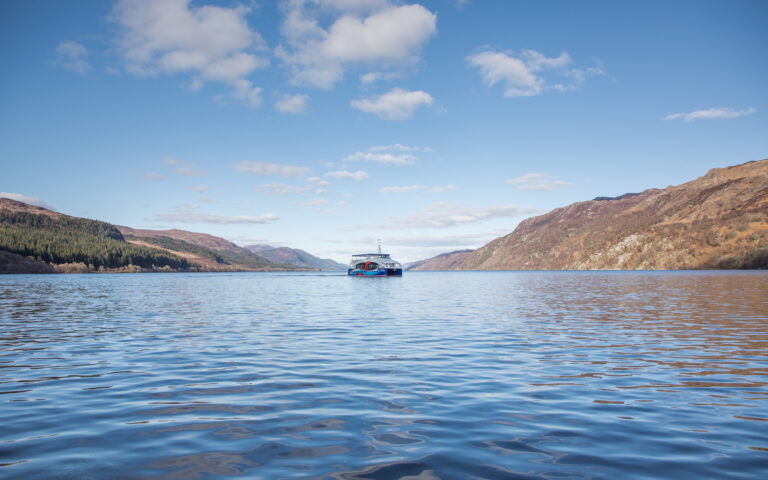
Loch Ness

Loch Ness

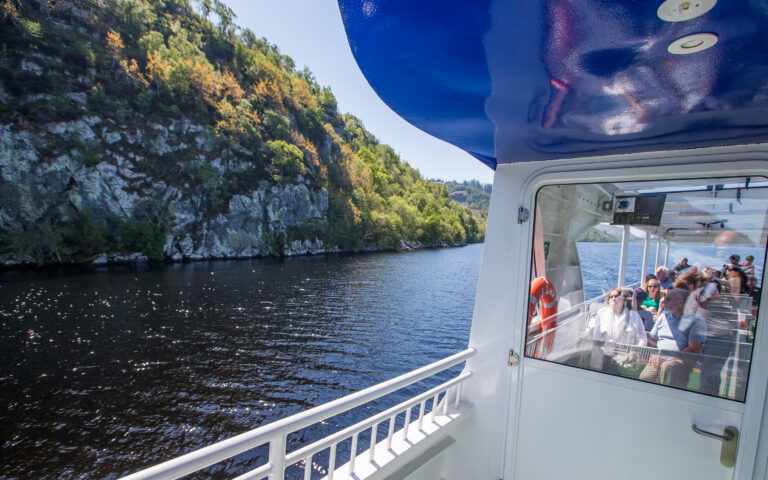
You are travelling across the world famous Loch Ness, but there is more of interest in this deep dark valley than just the monster.

Loch Ness is part of the Great Glen of Scotland, a geological fault line which runs from under the North Sea in the northeast to the edge of the Atlantic shelf in the southwest. It cuts Scotland in two.

The rocks which form the Highlands of Scotland were laid down in warm tropical seas far to the south of the equator more than five hundred million years ago. Around four hundred million years ago, the continents of North America and Europe collided and this created an enormous mountain chain. Those mountains are known as the Caledonians. Twenty million years later the Great Glen fault line was formed and the mountains to the north of the loch slipped 65 miles (100 kilometres) to the southwest forming a huge valley.

Eventually North America drifted away, the Atlantic opened and as the continents entered northern latitudes, they drew down upon themselves the great ice ages and our enormous jagged mountains were eroded to the stumps you see on either side of you during your journey today.

When the last ice age finished, about twelve thousand years ago, Loch Ness filled with freshwater and took the form you see today. Vegetation and trees arrived, but most were cut down during medieval times to produce charcoal for smelting and the pine forests you see here today are mainly introduced species like Larch, Douglas Fir, Sitka and Norwegian Spruce and even some Sequoia.

Our only native pine, the Scots Pine is best seen in nature reserves such as Glen Affric. Peat bogs stain the rainwater and it is that which makes the loch’s waters appear so dark.

The loch is around 23 miles long, averages 1 mile wide and is 754 feet deep. That is 35 kilometres long, 1.5 kilometres wide and 230 metres deep. You could put the population of the world into Loch Ness more than three times over and it contains more water than all the lakes, rivers and reservoirs of both England and Wales combined including the whole of the English lake district.

So … there is room for it to conceal a few mysteries.

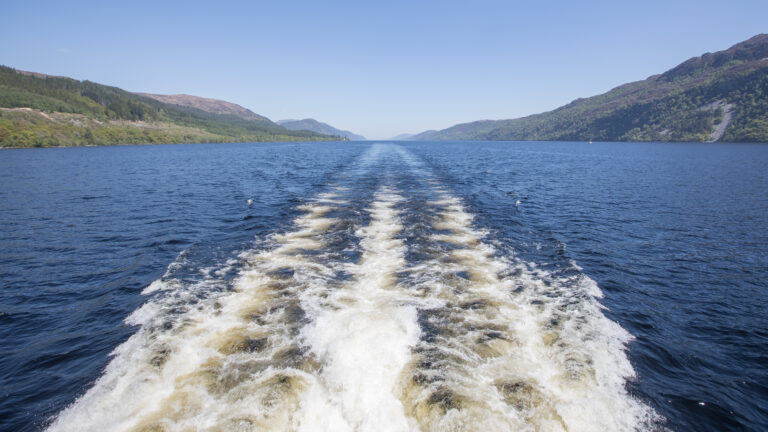
Boat Wake

The Loch Ness Mystery

Do keep your cameras to hand as you never know when you might be lucky enough to film or photograph something unusual on the loch.

Whether the phenomena seen at the surface could be Nessie will continue to be debated and there are many theories on the subject. So, let us take a look at the history of the Loch Ness monster and see if it provides any clues. The first recorded sighting of a mysterious creature in the loch was in 565AD by St Columba, a Scots/Irish missionary who was preaching Christianity to the native Picts in the area.

The story was probably just a parable to show the power of the church of the Christians. Sightings of a big fish occurred in the nineteenth and early twentieth century, but in 1933 the story suddenly exploded upon the world with a series of sightings and photographs. The most famous picture, that of a graceful neck protruding from the water, turned out to have been faked, but it will always remain the iconic image of the Loch Ness Monster.

Scientists have shown that long necked animals could not live in the cold water owing to its temperature and the lack of an adequate food supply.

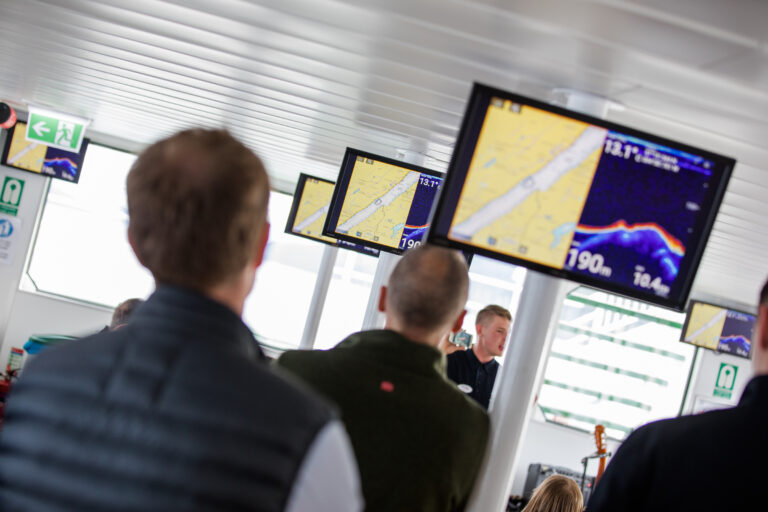
Some will be mistakes, diving birds and even deliberate invention. The vast majority of sightings are of a single hump and those could be large living creatures. Sonar confirms strong contacts in the deep water – the domain of fish rather than air breathers. Sadly the bulk of evidence collected has been mistakes, fakes or difficult to interpret.

One suggestion is that sturgeon may have been introduced to the river system and it is known they can live for centuries and grow to enormous proportions. The world record being 8.3 metres and over 240 years old. It might not be a very romantic monster, but at least it could be a real creature.

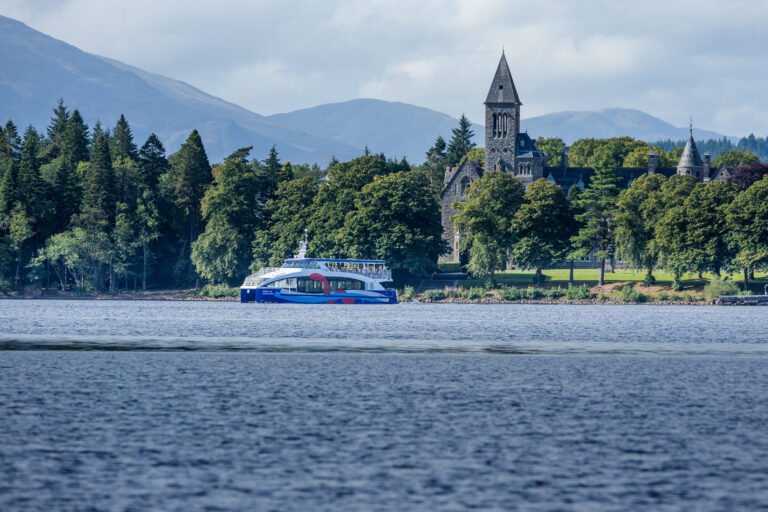
Fort Augustus Abbey

Fort Augustus and the Abbey

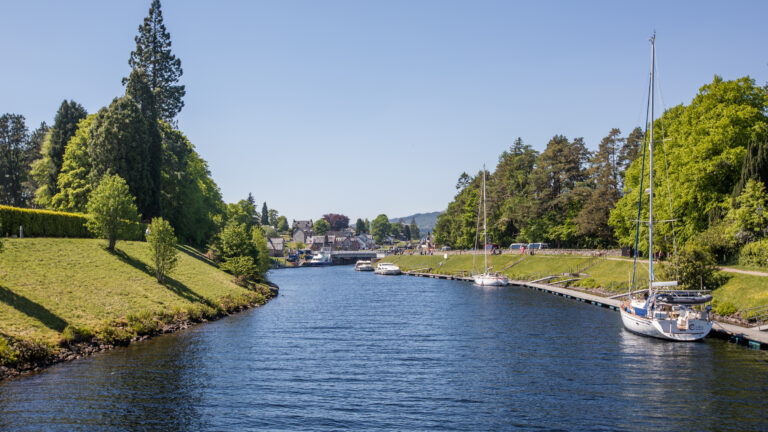
There has been a community living at this end of the loch since earliest recorded times.

Following Saint Columba’s attempt to convert the northern Picts to Christianity, the area moved back and forth between Pagan and Christian beliefs until, in the seventh century, Saint Cumin visited the glen. He built upon Saint Columba’s work and fully established Christianity in this part of the Highlands.

He built a church here and the village became known as Cille Chuimein or Church of Cumin. It is still known by this name locally and the local school is the Kilcumen Academy. After the second Jacobite uprising of 1715 (Jacobites were supporters of the Catholic Stuart monarchy), General George Wade built a network of roads with Cille Chuimein at its centre.

He also constructed a new fort here which he named Fort Augustus in honour of King George’s favourite son – William Augustus, the Duke of Cumberland. Once the fort was constructed, Fort Augustus became the English name for the village. The fort was enormous and solidly constructed with four heavily defended bastions at each corner. It housed a considerable military detachment.

The last Jacobite uprising took place in 1745 and the fort was surrendered to Jacobite forces which had badly damaged it with cannon fire. In 1746 the Jacobites were defeated and the Duke of Cumberland, the man for whom the fort was named, decided to use it as his headquarters, but it was unusable. Cumberland was infuriated by the destruction and began a series of dreadful atrocities against the Highland people. The fort was never rebuilt after 1745 and Lord Lovat purchased it from the government and refurbished one building to use as a hunting lodge, giving it to Benedictine monks in 1878 who built the abbey attached to the fort foundations and remaining buildings.

The monks operated it as a boarding school until 1993 and visitor centre until 1998. At the time it was the largest private visitor attraction in Scotland. Today these beautiful buildings are now converted into apartments and are no longer open to the public.

Gorrie's Cave

Gorrie’s Cave

In the cliffs on the south side of the loch is the concealed entrance of Gorrie’s Cave.

Gorrie’s real name was Alexander MacDonald, a notorious cattle thief. He used the cave as a hideout.

As a survivor of the battle of Culloden, he was determined to assassinate the Redcoat commander, the Duke of Cumberland, in revenge for the beating taken by his fellow clansmen during the battle.

Lying in wait on the hillside, he saw his chance when the Duke and his troops happened by. Gorrie’s blunderbuss was full of shot and nails. He remained hidden while he waited for the Duke to come into range.

Unfortunately for Gorrie, the shot was a bad one and missed. He immediately turned to flee back to his cave and was pursued by the Redcoat soldiers who lost sight of him in the heather.

With food and supplies being brought by his wife and other village folk, he managed to remain hidden in the cave for several months. Eventually the Redcoats gave up the search and the tale does not tell what finally became of this fugitive from Cumberland’s rough justice.